
STUDIO
Breaking the Fine Print Monopoly
How Information Architecture Makes Contracts and Legal Disclosures Usable and ISO Plain Language Compliant at Scale
submitted by Tessa Manuello
In this use case:
- Executive Summary & Introduction
- The Challenge: The Behavioral Dynamics of Digital Consent and Contract Fatigue
- The Problem Statement: The Delivery Interface as the Decisive Bottleneck
- Methodology & Approach: The Iterative Journey
- Results & Discussion: Bridging Legal Design and Plain Language
- Conclusion: A Repeatable Blueprint for Scalable Trust
- Download PDF
Executive Summary & Introduction
Legal documents, from consumer terms and privacy policies to platform agreements, vendor contracts, and operational disclosures, present a practical challenge in legal operations. While these agreements establish commercial parameters and manage corporate liability, traditional drafting formats deliver them as uninterrupted walls of text. As a result, users, customers, and counterparties experience cognitive fatigue, causing them to skim or, worse, sign without reading.
When organizations attempt to solve this compliance crisis, they usually operate under the assumption that they must choose between two polarized approaches: plain language or legal design:
1. Linguistic Rewrites (Plain Language) – Attempting to redraft dense clauses into simpler wording:
While beneficial for reader comprehension, legal teams are often hesitant to let go of court-tested, vetted text. Consequently, full linguistic rewrites become a slow, delicate, and expensive exercise requiring extensive internal alignment and regulatory review. Even when completed, the simplified copy is often poured right back into a flat, unformatted block of text.
2. Graphic Overhauls (Legal Design) – Embedding flowcharts, diagrams, and corporate color palettes:
For most lawyers and legal ops teams, graphic creation is an unfamiliar discipline. Visual assets are difficult to design without specialized software, hard to edit when terms change, and cumbersome to scale or maintain across dynamic web pages, PDFs, and mobile screens.
This case study demonstrates a practical middle ground: an architecture-first approach focused on Information Architecture (IA). By shifting the design focus to the structural container rather than rewriting words or creating custom graphics, legal teams can eliminate the friction of both approaches: Organizations retain 100% of their vetted, binding legal text to preserve liability protection, while gaining the capability to layer interactive navigation menus and active-voice summaries.
Crucially, this approach aligns with international plain language standards (ISO 24495-1:2023) and legal communication guidelines (ISO 24495-2). These frameworks explicitly establish that clarity requires intentional formatting, chunking, and navigational pathways, not just simpler word choice.
Tracing two years of real-world field applications across digital terms, platform agreements, and creator contracts, this study shows that a standardized, text-driven Information Architecture improves user navigation, speeds up data retrieval, and builds trust, without altering core legal terms or creating graphic asset maintenance.
The User Freeze Effect: Why Users Bypass Terms and Agreements
From a strictly legal perspective, digital Terms of Use, Privacy Policies, and platform agreements are enforceable commercial contracts. From a user perspective, however, they are often treated as nonnegotiable formalities. Empirical data indicates that an overwhelming 91% of consumers consent to legal terms without ever reading them (Deloitte 2017).
While digital terms trigger “blind consent,” broader commercial contract, such as vendor terms or creator agreements, suffer from a parallel issue: contract fatigue. Even when underlying contractual terms are consumer-friendly or balanced, dense text walls create cognitive friction that slows down review, generates friction during onboarding, and erodes trust before the relationship even begins.
This systemic failure across both digital disclosures and standard agreements is driven by four key barriers:
Blind Consent: Users enter into binding agreements with complete unawareness of their contents, treating the agreement window or document as a temporary obstacle to bypass as quickly as possible.
The Transparency Paradox: As organizations add granular disclosures to limit liability, documents naturally grow denser and longer. This expansion of formal transparency directly triggers a collapse in actual reader comprehension.
Contracts of Adhesion and Cognitive Rationing: Because standard agreements are non-negotiable (“take-it-or-leave-it” terms), the human brain performs an instantaneous cost-benefit analysis. Recognizing that they lack the agency to alter terms, users view spending hours reading dense boilerplate as an inefficient use of cognitive energy.
Choice Architecture and Habituation: Modern digital environments rely on habituation, the neurological tendency to stop responding to recurring stimuli. Encountering endless cookie banners and agreement checkboxes turns consent into a subconscious reflex rather than an informed choice.
Together, these psychological barriers confirm that widespread non-reading is not a failure of user diligence, but a direct byproduct of a broken presentation interface that actively induces paralysis.
The Regulatory Tightening: Shifting from Substance to Delivery
While companies are rarely restricted by law from publishing lengthy terms, the global regulatory landscape is changing rapidly. Regulatory bodies and courts are shifting focus from merely evaluating what a contract says to scrutinizing how that information is delivered. Transparency is no longer a passive text archive; it is a baseline metric for legal validity.
United States: The Federal Trade Commission (FTC) requires critical consumer disclosures to be prominent, easily noticeable, and structured for effortless location and comprehension. Privacy statutes, led by the California Privacy Protection Agency (CCPA/CPRA), explicitly mandate that notices be readily understandable, legible, and optimized for human reading.
European Union: The EU General Data Protection Regulation (GDPR) and the EU AI Act require compliance disclosures to be delivered in a concise, transparent, intelligible, and easily accessible form using clear and plain language.
The gap between regulatory expectations and commercial reality remains vast. Reading Microsoft’s service agreement alone takes over an hour, roughly the time required to read Shakespeare’s Macbeth (Visual Capitalist, 2020). Further empirical studies by McDonald and Cranor (2008) confirmed that reading every privacy policy encountered in a single year would require 76 full workdays.
Concurrently, industry analyses indicate that transparent, logically organized disclosures do more than fulfill a warning function; they serve as a primary driver of customer goodwill, transforming compliance into a mechanism for building brand trust (Bloomberg Law, 2024). This commercial reality is heavily reinforced by empirical academic research. Professor Katri L. Nousiainen evaluated the practical efficacy of document modernization through legal design, revealing that 62.5% of participants explicitly preferred legal design terms over traditional legalese. Crucially, this comprehension lift was not limited to lay consumers; legal professionals themselves found the legal design versions significantly easier.
Despite clear evidence of user frustration, large enterprises continue to resist changing their drafting practices because these texts function primarily as corporate liability shields. Mitigating legal risk takes priority over clear communication. Furthermore, legal teams fear that converting clauses into simplified text or visual components might lead to omissions, weakening defensive postures in court. This defensive drafting style means legal departments continue to deliver dense boilerplate text, prioritizing risk mitigation and courttested wording at the expense of user clarity and brand trust.
Most agreements remain trapped in legacy formats, presenting users with dense walls of unformatted text. Yet, empirical research confirms that the interface presentation layer directly dictates user comprehension and behavior (Blanchard & Milsark, 2025). Despite a decade of legal design frameworks (Stanford, 2013; Hagan, 2016; WorldCC, 2019) alongside international plain language standards (ISO 24495-1:2023; ISO 24495-2), corporate adoption for legal agreements remains remarkably low. Haapio et al. (2018) formally identified this implementation gap, noting that while interactive design patterns are routinely proposed as cures for complex terms, they remain glaringly absent from live corporate policies. Our survey revealed overall adoption had stagnated at 17% (Legal Creatives, 2024), so we conducted a new survey to examine the root causes behind this stagnation.
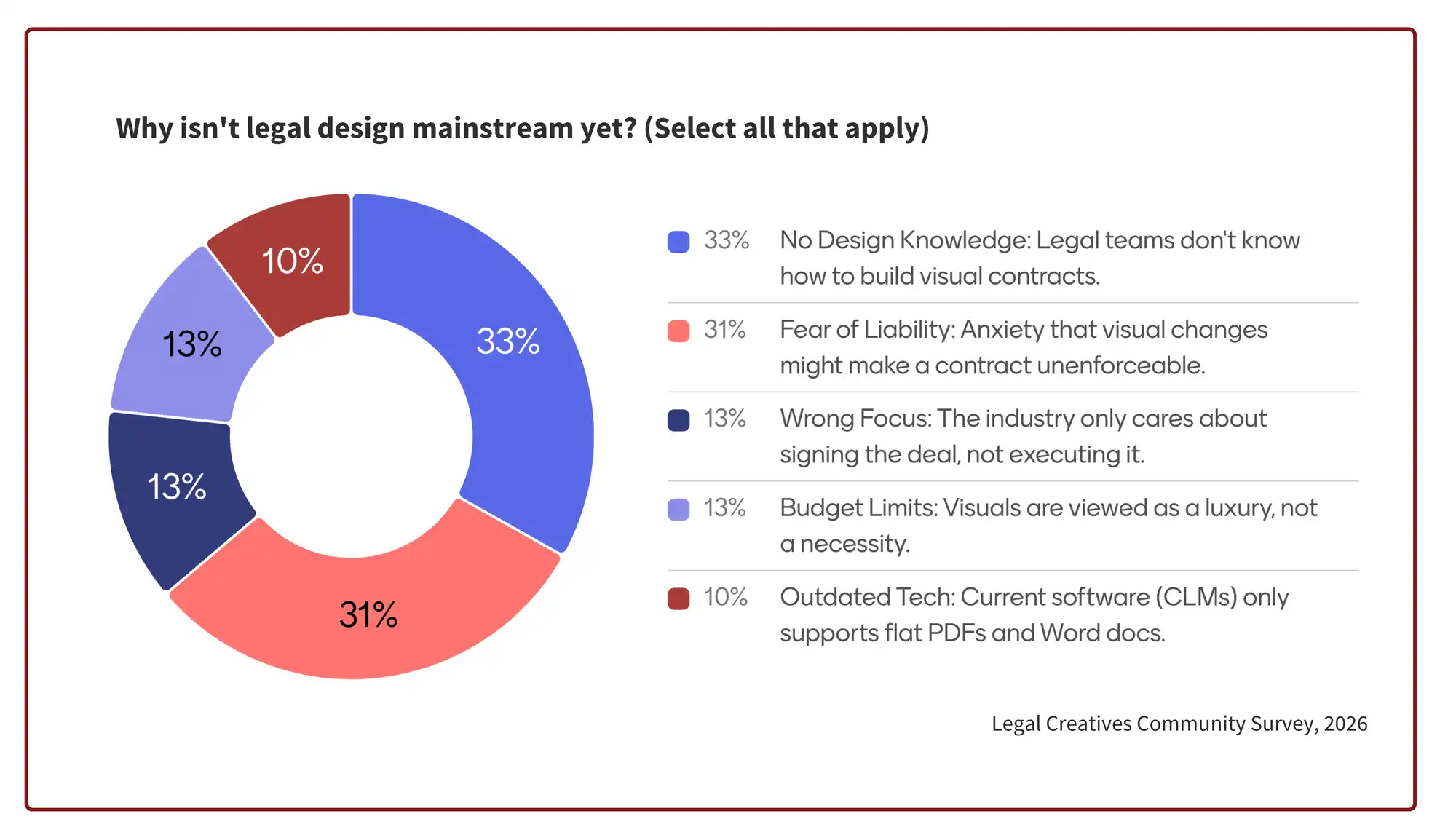
To uncover why legal design isn’t mainstream yet, our 2026 community survey revealed that a combined 64% of respondents cited No Design Knowledge (33%) and Fear of Liability (31%) as their primary barriers to adoption. These top two metrics are intrinsically linked: without formal training, legal teams naturally develop an acute anxiety that modifying a document’s language, structure or layout might compromise contract enforceability or omit critical legal protections.
Our experience training thousands of legal professionals worldwide since 2017 confirms that this skill deficit creates a paralyzing conceptual blind spot. When we speak with practitioners, we consistently find that most do not realize they can combine plain language with legal design mechanics through layout alone.
Lacking a framework for gradual, low-risk implementation, legal teams fall into a false dichotomy: they assume document modernization demands an all-or-nothing choice between a complete graphic overhaul or an exhaustive linguistic rewrite.
Trapped between the fear of rewriting court-tested wording and the inability to design complex graphics, legal departments get stuck exploring three flawed, resource-intensive paths:
The Wording-Only Fallacy (Plain Language Only)
Replacing legalese with plain language can accelerate contract negotiations by 60% (Burton / GE Aviation, 2018). However, organizations frequently treat plain language as a purely linguistic exercise. This misinterprets ISO 24495-1:2023, which explicitly establishes that plain language requires structural layout architecture. As a result, legal teams spend months simplifying clauses only to pour the copy back into a flat, unchunked document template. Indeed, a 12-country European study of over 12,000 respondents (Elshout et al., 2016) proved that linguistic simplification alone yields only a negligible increase in user comprehension. A simplified wall of text is still an unnavigable wall of text.
The Visual Overhaul (Legal Design Only)
Conversely, traditional legal design interventions often demand comprehensive visual overhauls, requiring custom illustrations, flowcharts, and bespoke layouts. While visually appealing, this approach creates severe enterprise operational barriers:
- Developer Dependency: Dynamic layouts and templates (such as the open-source Juro privacy notice template) rely on custom code, locking out legal teams without front-end developer support.
- Asset Licensing & Maintenance: Graphic templates rely on icon sets and visual assets that require manual redesigns whenever terms update or scale.
- Localization Friction: Translating diagrams into global languages is time-intensive.
- Accessibility Failures: Embedded graphics often break WCAG accessibility standards for screen readers.
The Superficial Masking Layer (Decorative Only)
Faced with these hurdles, some organizations resort to cosmetic fixes, applying corporate colors, decorative elements, and generic icons over unformatted text. As legal scholar Emily Allbon (2024) notes:
“Design in this context is not about making something look prettier or shinier [… ] Legal design is not a superficial process, it is about ensuring that the design […] gets the user to connect, to understand what is being presented to them.”
Exploring an Architecture-First Alternative (Hybrid)
To overcome these barriers, the legal industry needs a shift from asset-heavy language simplification or visual decoration to semantic, text-driven Information Architecture (IA). By utilizing responsive UI (User Interface) mechanics, specifically persistent global navigation, clear typographic hierarchies, and layered progressive disclosure, legal teams keep 100% of their master legal text intact while meeting ISO 24495 standards across web, PDF, and print formats. The following sections evaluate the empirical testing of this framework across its initial corporate implementation and formal validation against international standards.
To trace the operational evolution of text-driven Information Architecture interventions, this study examines a structural methodology developed across distinct chronological phases over a two-year period. Rather than isolated experiments, these phases represent a deliberate progression from preliminary market diagnostics to field testing and standardized validation.
Phase A: Preliminary Research & Landscape Diagnostic
Prior to field deployment, the research team conducted a diagnostic of the compliance landscape, deeply informed by practitioner data gathered through online contract and legal design workshops since 2017. Across nearly a decade of direct engagement, corporate legal teams and practitioners consistently reported the same operational boundaries: limited bandwidth, restricted budgets, and intense internal resistance to altering court-tested text or managing custom graphic assets.
Even when practitioners explicitly wanted to rewrite and simplify language, they routinely cited institutional constraints, such as regulatory compliance requirements or non-negotiable risk parameters, that made modifying master terms impossible. This established a clear market mandate: any viable plain language and legal design interventions had to be lean, scalable, and executable within existing workflows without software development dependencies, graphic maintenance, or mandatory textual changes.
This requirement coincided with the release of ISO 24495-1:2023, which codified that true plain language cannot be achieved through wording alone. The standard mandates that documents be built systematically around four core principles: Relevant, Findable, Understandable, and Usable. Crucially, the specialized subset for legal communication (ISO 24495-2, Section 5.1.3) explicitly mandates information layering for diverse readers. The standard defines layering as presenting distinct levels of detail within the same unified document container so that non-expert readers can grasp key takeaways without being overwhelmed by technical detail. ISO 24495-2 recommends structural layout techniques—such as multi-column summary pairings, distinct side-panels, or navigable section layers—so that different reader tiers are written, approved, and maintained together without requiring separate document versions.
Concurrently, a landscape audit of early legal design implementations by major technology platforms (including Google, GitHub, PayPal, LinkedIn and Pinterest) revealed active attempts to optimize user-facing terms using three primary mechanisms:
- Information Architecture: Utilizing sidebars and sticky navigation menus.
- Layered Disclosure: Pairing master legal text with active-voice summary callouts.
- Cognitive Cueing: Employing highlighted background containers and typographic hierarchy instead of legacy ALL-CAPS text.
However, this audit revealed a critical bottleneck: these early corporate implementations were highly fragmented and unviable for standard organizations. Each company built bespoke visual wrappers directly into their codebases. For typical legal operations teams, these custom builds offered no repeatable architecture, requiring front-end engineers to deploy and creating ongoing maintenance risks whenever terms required regulatory updates.
Given that graphic assets, custom coding, and linguistic rewrites create persistent friction and institutional pushback, this led to our core research question: Can a standardized, asset-free, text-driven layout framework enable organizations to adopt legal design and meet ISO plain language criteria—even when changing the underlying legal text is not an option?
Phase B: Initial Corporate Field Application (Contract Nerds Case Study)
The first complete application of this structural methodology occurred with the comprehensive redesign of the Terms of Use for Contract Nerds (2024), a digital legal publishing platform and community. Facing a commercial update, the company’s baseline document was a traditional, linear block of text. To meet strict corporate requirements, the intervention had to preserve 100% of the legal language while fundamentally transforming the reader experience across digital screens.
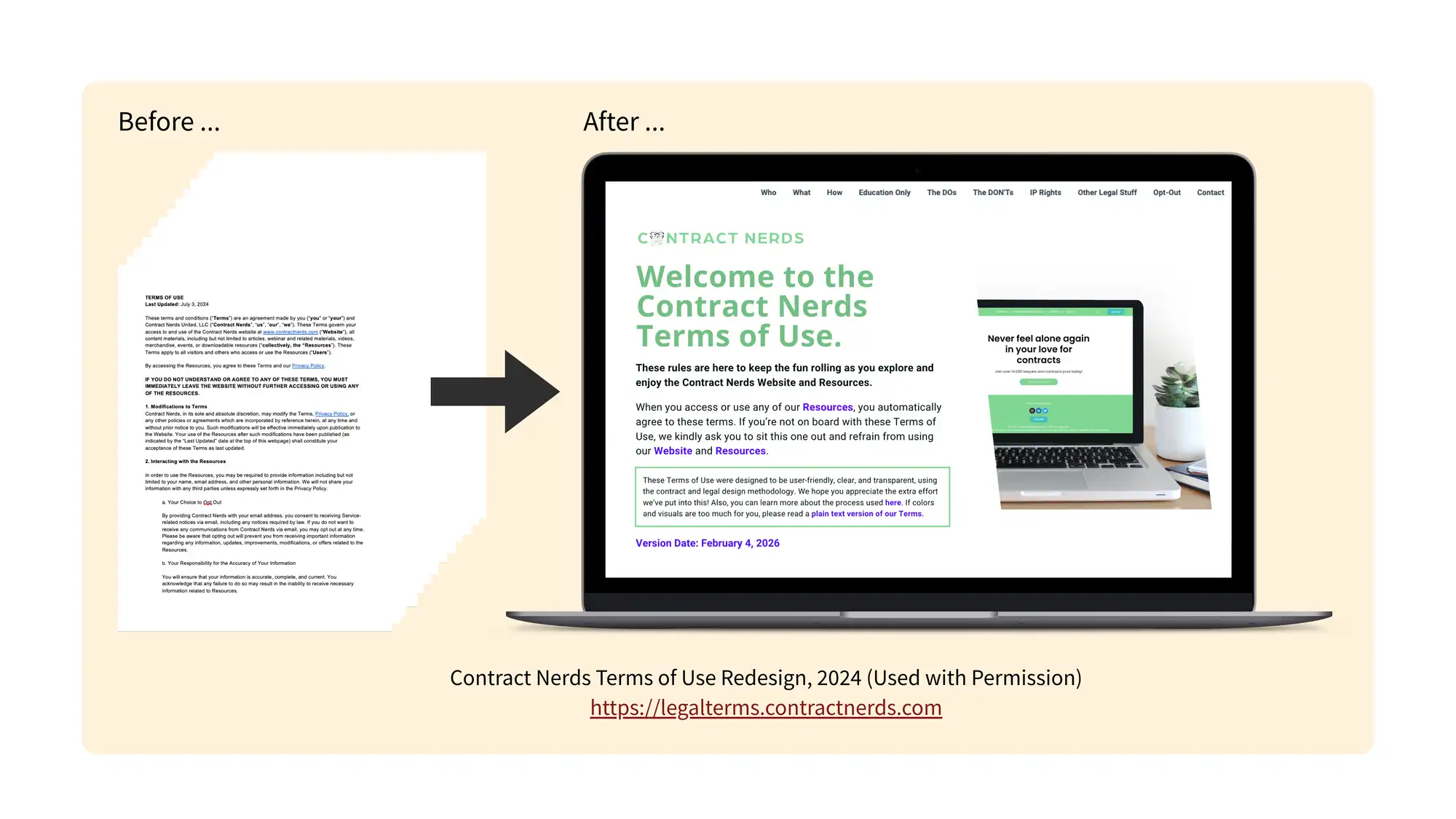
Link: Contract Nerds
To resolve this without rewriting master terms, we implemented a non-linear Information Architecture tailored to digital reading behaviors:
- Landscape & Mobile-First Orientation: Recognizing that users navigate resources on desktop monitors and mobile devices rather than printed pages, the visual container shifted to a horizontal, screenoptimized layout to match natural scanning patterns.
- Logical Reorganization: Document sections were reordered to follow a logical user journey, placing operational rules and user-relevant provisions upfront while grouping legal provisions toward the end.
- Sectional Color-Coding: Distinct visual background fills and subtle color transitions were introduced across sections to provide clear structural anchors as users scrolled through the agreement.
- Side-by-Side Dual-Layered Summaries: For purely legal provisions, the legal text was left completely untouched. Directly alongside each clause, we layered concise, active-voice plain-language summaries. This side-by-side presentation created an immediate cognitive bridge, allowing users to grasp a clause’s intent instantly while keeping the formal text adjacent for full legal precision.
- Persistent Global Navigation: An integrated navigation menu and jump-links were embedded at the top, enabling users to jump between sections in a single click.
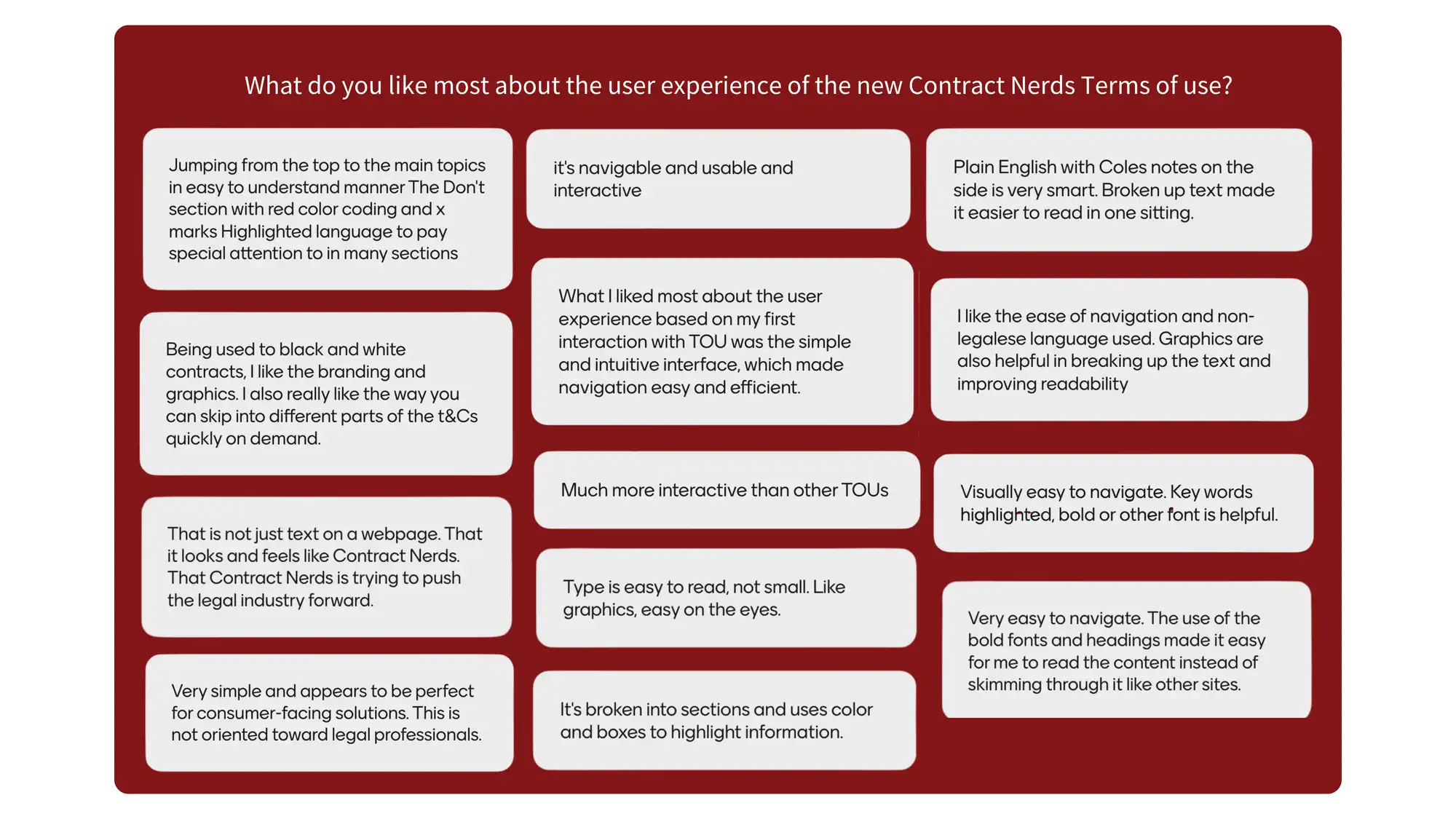
Behavioral testing during this phase yielded immediate user insights: readers routinely scanned the plainlanguage summaries to understand the context, diving into the detailed legal text only when seeking specific terms. Contract and legal professionals themselves strongly favored this progressive disclosure model.
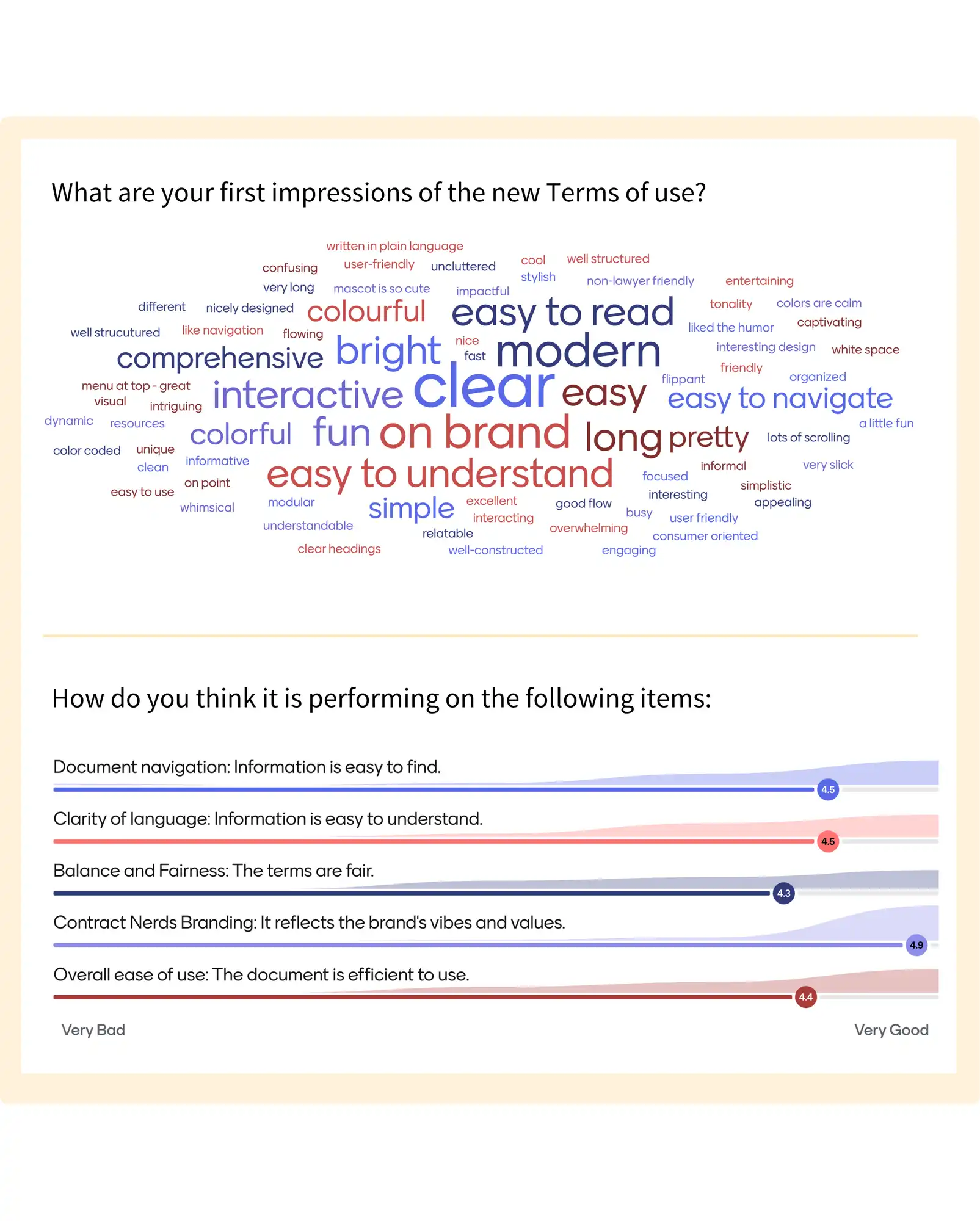
In a community survey evaluating the new Terms of Use, participants frequently highlighted the navigation experience, describing the layout as “clear,” “easy,” and “modern”.
Quantitative feedback confirmed the operational impact of this structural model: 77% of respondents stated that this transparent delivery model directly enhanced long-term brand trust and platform engagement.
Crucially, Phase B established that users actually appreciated visual breathing room, white space, unbundled paragraph containers, navigation menus, and summary layers. While these elements naturally expand document layout space, they eliminate systemic cognitive friction without altering a single word of legal copy.
Phase C: Expanding ISO Layering Across Agreements & Typologies
Application No. 1: Legal Creatives Disclosures
To test the universal scalability of our asset-free Information Architecture across varied legal typologies, Phase C (2026) began by applying the ISO 24495-2 layering framework across our own complete digital compliance suite, including the Legal Creatives Terms of Use, Privacy Policy, Cookie Policy, Accessibility Policy, and Acceptable Use Policy. By establishing a single, highly structured layout model and duplicating its architectural principles across all five policy documents, we proved that a unified Information Architecture can govern an entire enterprise legal ecosystem while maintaining 100% of the underlying text.
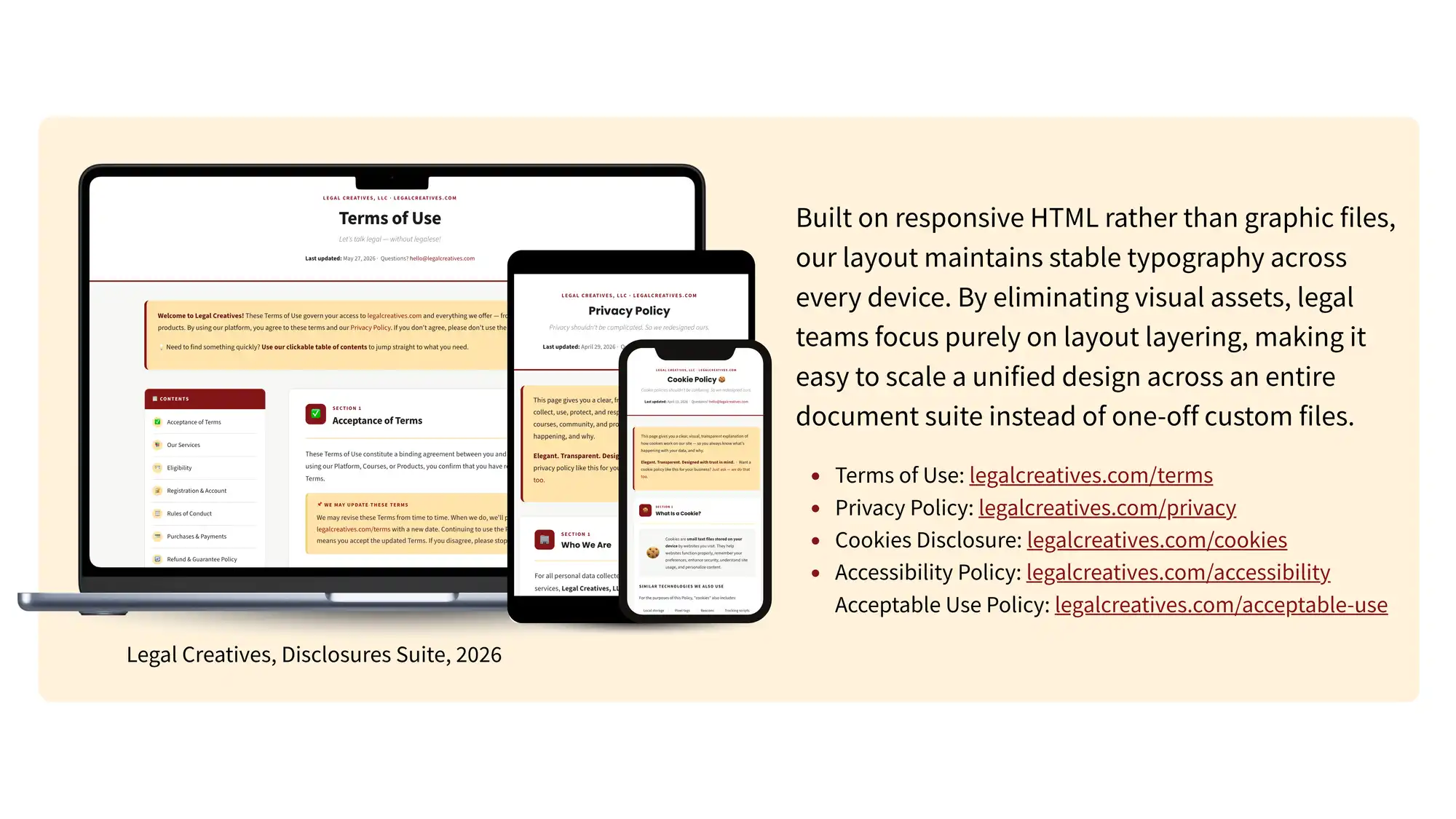
Links: Legal Creatives Terms of Use · Privacy Policy · Cookies Disclosure · Accessibility Policy · Acceptable Use Policy
Qualitative sentiment tracking further confirmed these numbers; the dominant user terms chosen to describe the interface were “Clear,” “Easy,” “Structured,” and “Transparent”.” By transitioning from a flat, legacy mode of exposure to a structured layout powered by Information Architecture, the framework is aimed at satisfying the four core pillars mandated by the ISO Plain Language norms:
- Relevance: Information was structured dynamically around the reader’s operational relationship with the platform rather than internal corporate logic.
- Findability: The continuous linear scroll was replaced by a persistent, interactive sidebar navigation menu, enabling users to scan non-chronologically and isolate specific subclauses in seconds.
- Understandability: Boilerplate blocks were dismantled into modular text containers utilizing clear typographic hierarchies and progressive disclosure to ensure terms were comprehensible on the first read.
- Usability: Usability was validated through reader testing to validate readers could seamlessly execute their intent and locate crucial rights without operational friction.
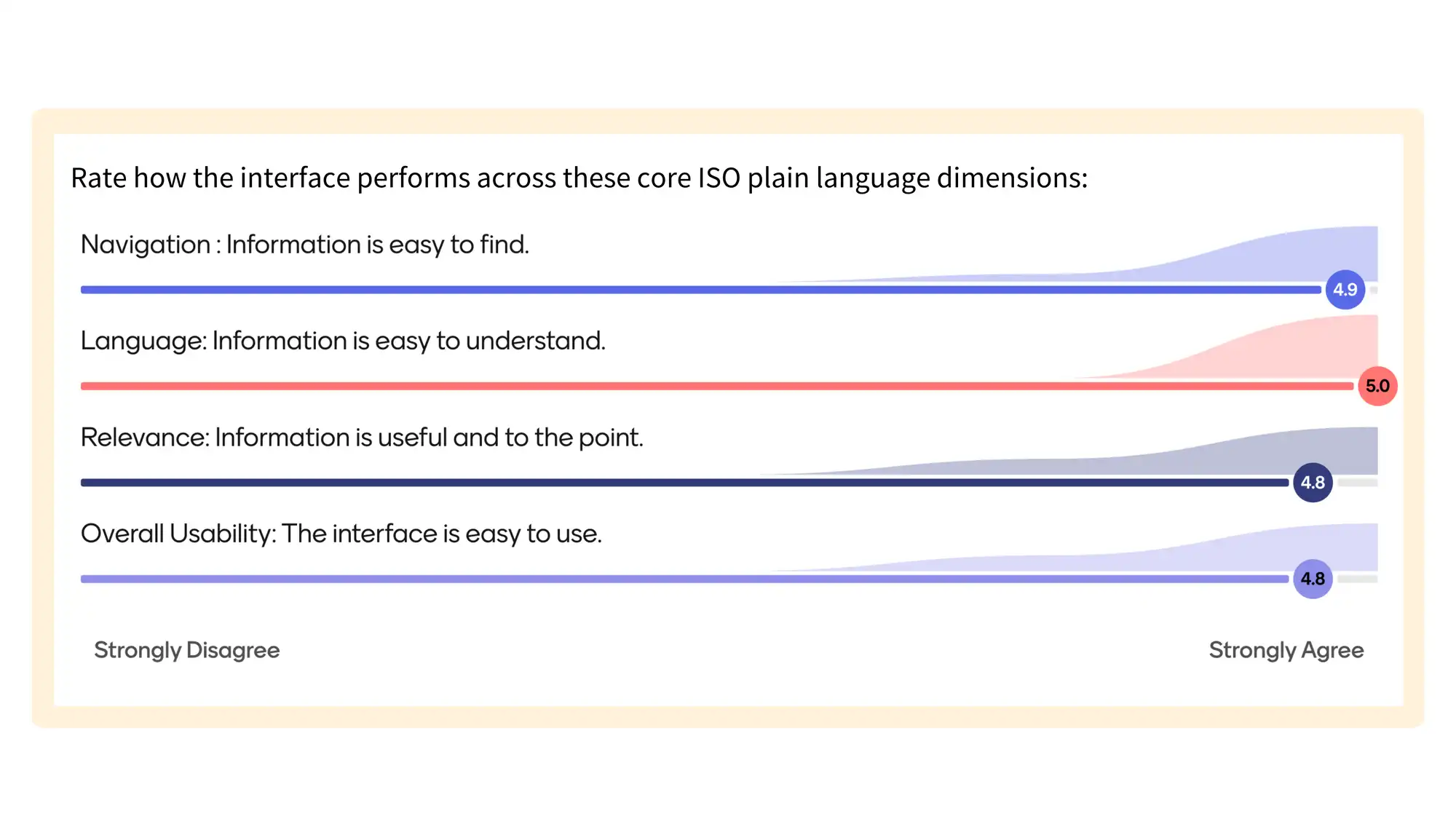
To provide rigorous validation for this standardized framework, the interface was subjected to formal user testing and survey assessments where users performed active data-retrieval tasks. The empirical results yielded near-perfect mean scores across all evaluated ISO dimensions: 4.8/5.0 for Navigation & Findability, 5.0/5.0 for Language & Understandability, and 4.8/5.0 for Relevance and Overall System Usability.
Building on this internal baseline, we expanded the field research to evaluate how this standardized, assetfree layout translates across prominent third-party agreements:
- B2C Consumer Digital Terms (Calm Terms of Use): Demonstrating how consumer-facing terms for hightraffic digital platforms can eliminate “blind click” friction while keeping legal language completely intact.
- B2B & Creator Contracts (Maven Instructor Agreement): Proving how commercial agreements can streamline creator onboarding and build trust without slow, high-risk contract negotiation loops.
- Regulatory Disclosures (AI Governance Privacy Policy): Showing how dense, highly technical privacy and AI data-handling policies can be organized into findable, navigable layers using clear grids.
(Note: Third-party documents such as the Calm Terms of Use and Maven Instructor Agreement were redesigned for educational and research purposes to evaluate performance across varied typologies. They are not endorsed by the respective entities.)
Application No. 2: B2C Consumer Terms (Calm Terms of Use Prototype)
To test how ISO layering performs within high-volume B2C environments, we applied the framework to a consumer digital terms prototype inspired by Calm. Consumer terms are traditionally prone to “blind consent” due to dense liability language and auto-renewal disclosures. By keeping 100% of the original legal text completely untouched, the prototype introduced persistent top navigation jump-links, side-by-side plain-language “In Brief” callout boxes, and brand colors matching the consumer interface.
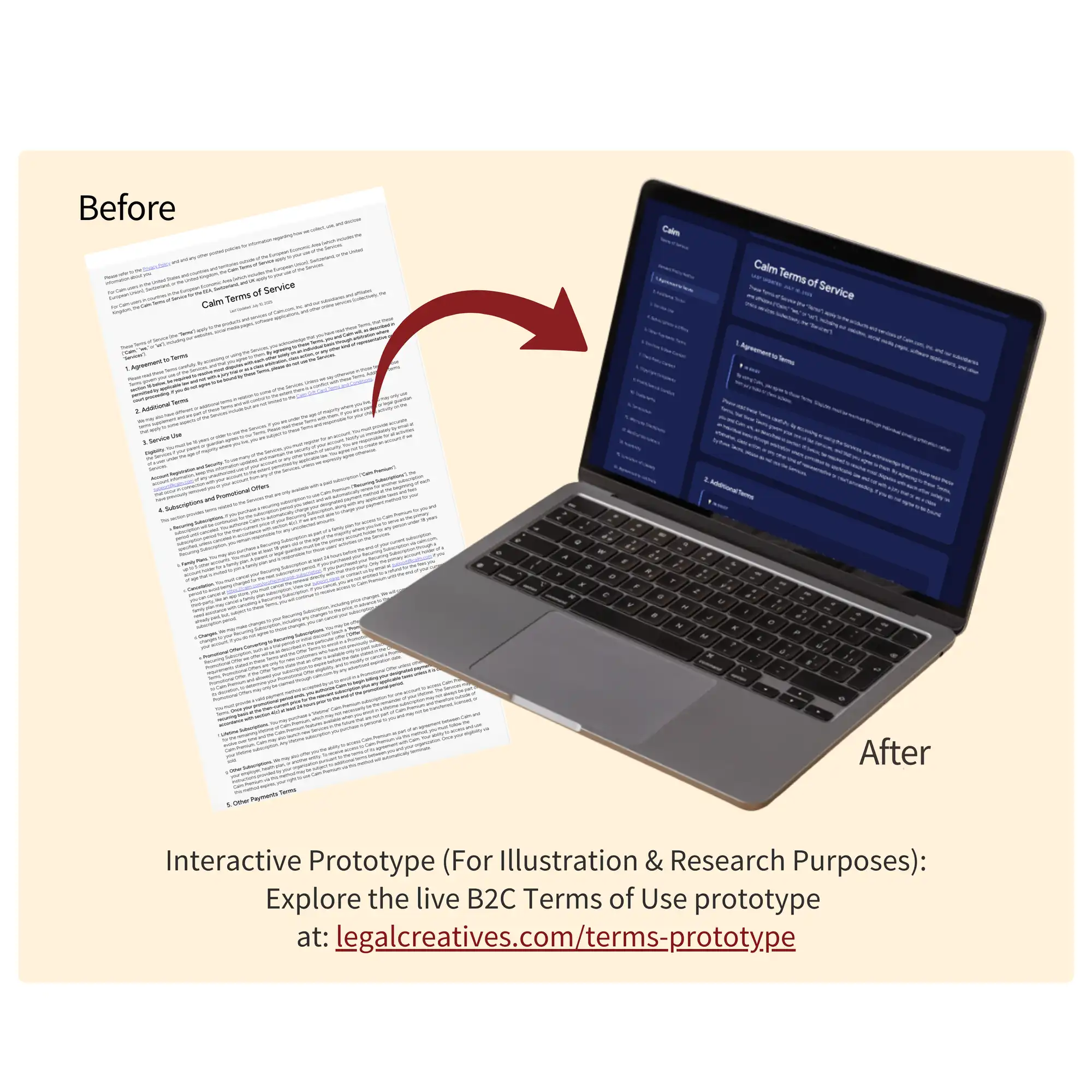
In user testing, 100% of respondents reported that the summary callouts and navigation sidebar made finding specific information significantly or somewhat easier and faster. Qualitative feedback highlighted that the side-by-side summary boxes acted as instant cognitive guides, with users noting: “The ‘In Brief’ sections were so clear & to the point. They gave me confidence that I could digest the agreements’ key terms in a few pithy boxes instead of missing key terms within dense paragraphs.”
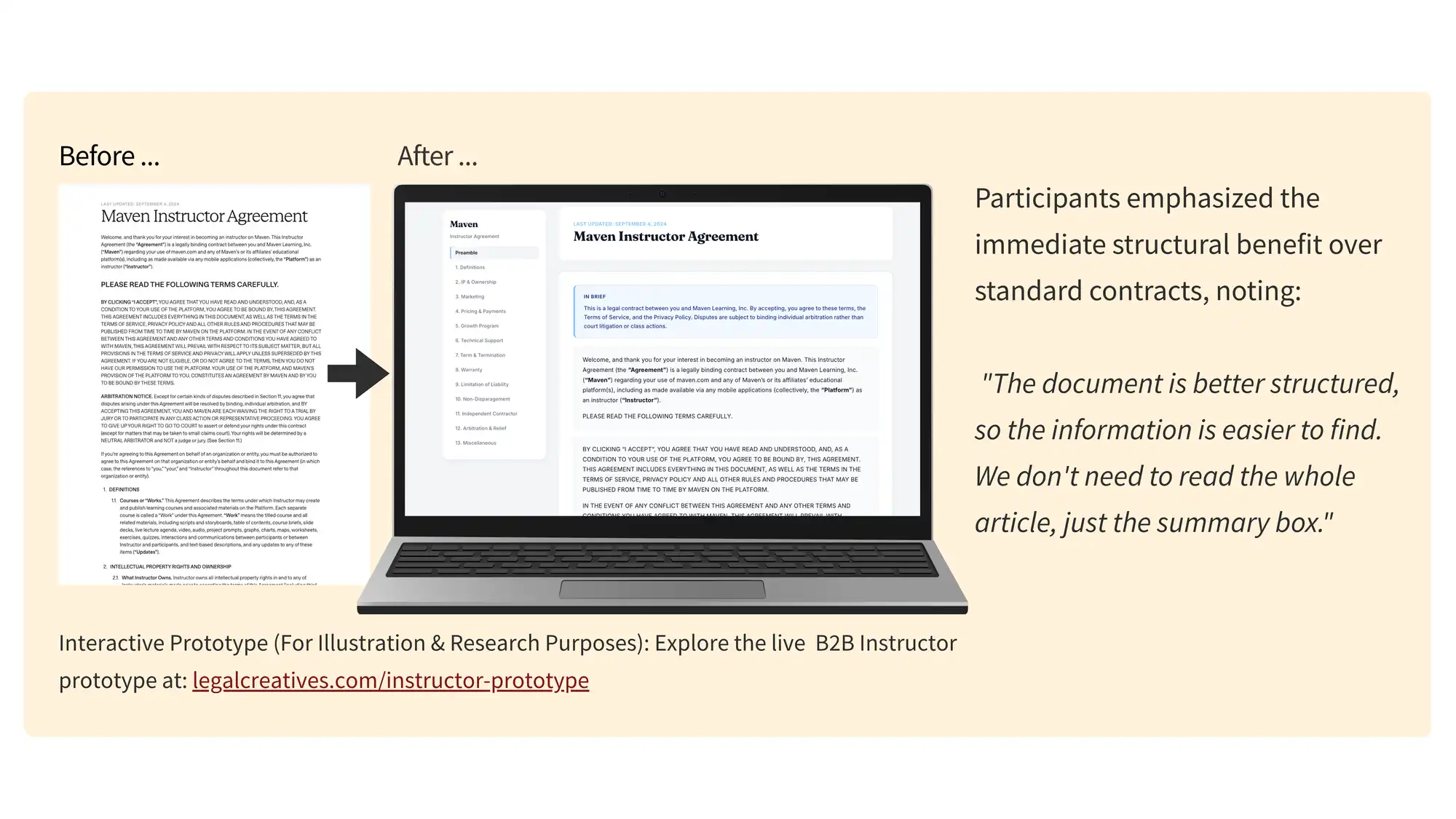
Application No. 3: B2B Commercial & Creator Agreements (Maven Instructor Agreement Prototype)
Moving beyond standard platform terms, we evaluated commercial B2B environments using an independent instructor agreement prototype based on Maven. Creator agreements present unique legal friction because independent contractors must quickly evaluate complex intellectual property rights, revenue splits, and payout schedules before onboarding.
The ISO-layered architecture organized these critical business obligations into clear, unbundled structural sections backed by active-voice summary cards. Testing demonstrated that this structural clarity directly mitigates counterparty anxiety: users rated the redesigned interface 4.5 out of 5.0 for feeling more modern, transparent and trustworthy.
Application No. 4: Complex Regulatory Disclosures (AI Governance Privacy Policy Prototype)
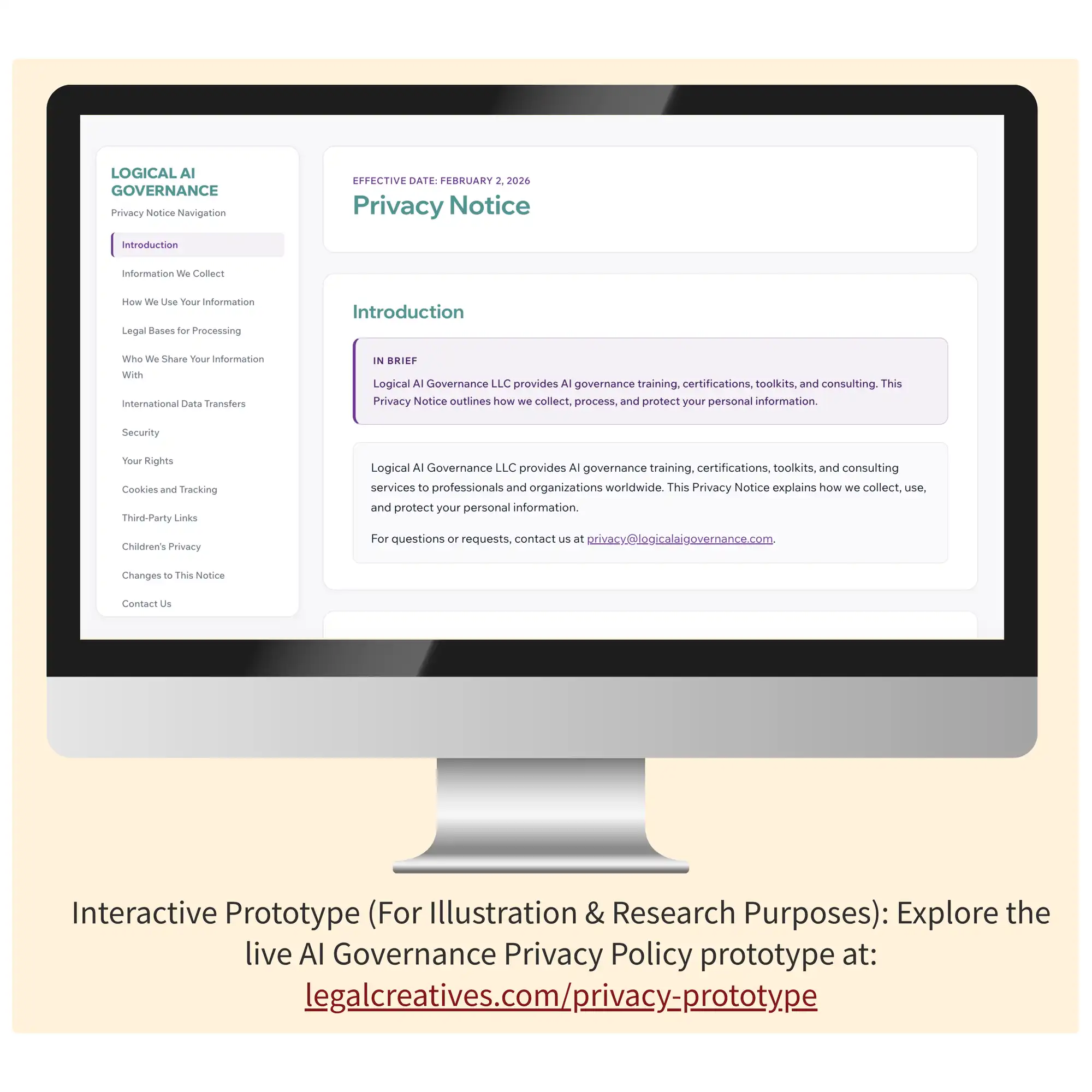
To evaluate the framework against dense regulatory compliance requirements, we applied ISO layering to an independent AI Governance Privacy Policy prototype. Privacy notices covering artificial intelligence and complex data-handling practices are notoriously unwieldy due to overlapping global statutory requirements, including the EU General Data Protection Regulation (GDPR), the California Consumer Privacy Act (CCPA/CPRA), US FTC transparency guidelines, and emerging EU AI Act governance disclosures.
Traditional regulatory disclosures force readers through hundreds of lines of technical boilerplate, triggering severe cognitive fatigue and compliance opacity.
The ISO-layered redesign resolved this complexity without altering a single word of legal language by implementing:
- Structured hierarchy
- Clear section headers
- Plain language summaries
- Clickable persistent sidebar menu
Key Findings Across All Four Prototype Typologies:
When evaluating user sentiment, participants scored the redesigned interfaces 4.5 out of 5.0 for feeling significantly more modern, transparent, and trustworthy. When asked to compare versions, 100% of users chose the ISO-layered text model, emphasizing that the structural layout eliminated dense legalese without sacrificing nuance: “Summary sections were useful as ‘guides’ to the remainder of the content.”
Application No5: Word, PDF, and Print Documents
The exact same text-driven Information Architecture translates seamlessly to static formats—such as PDFs, Word documents, or printed paper—without relying on web code or dynamic widgets. When adapting ISO plain-language layering to traditional A4 or Letter portrait page layouts, the framework relies on intentional document geometry:
- Front-Page Navigation: Rather than a digital sidebar, the document begins with a structured Table of Contents on page one that serves as an immediate visual map of the entire agreement.
- Header & Footer Navigation Anchors: Each subsequent page incorporates section jump-anchors in the top margin header and a persistent “Back to Table of Contents” return link in the page footer, enabling readers to navigate print or PDF files non-linearly.
- Side-by-Side Layered Grid Layout: Page margins are divided into a dual-column grid. The outer column displays active-voice “In Brief” summary cards, while the main body column preserves 100% of the courttested, full-text legal clauses.
- Typographic Hierarchy & Negative Space: Clear header sizing, generous line-spacing, and distinct container borders maintain visual clarity whether the document is viewed on a screen as a PDF or read as a physical paper document. This guarantees that ISO plain-language visual hierarchy functions universally across digital and physical mediums without requiring duplicate document versions or special software.
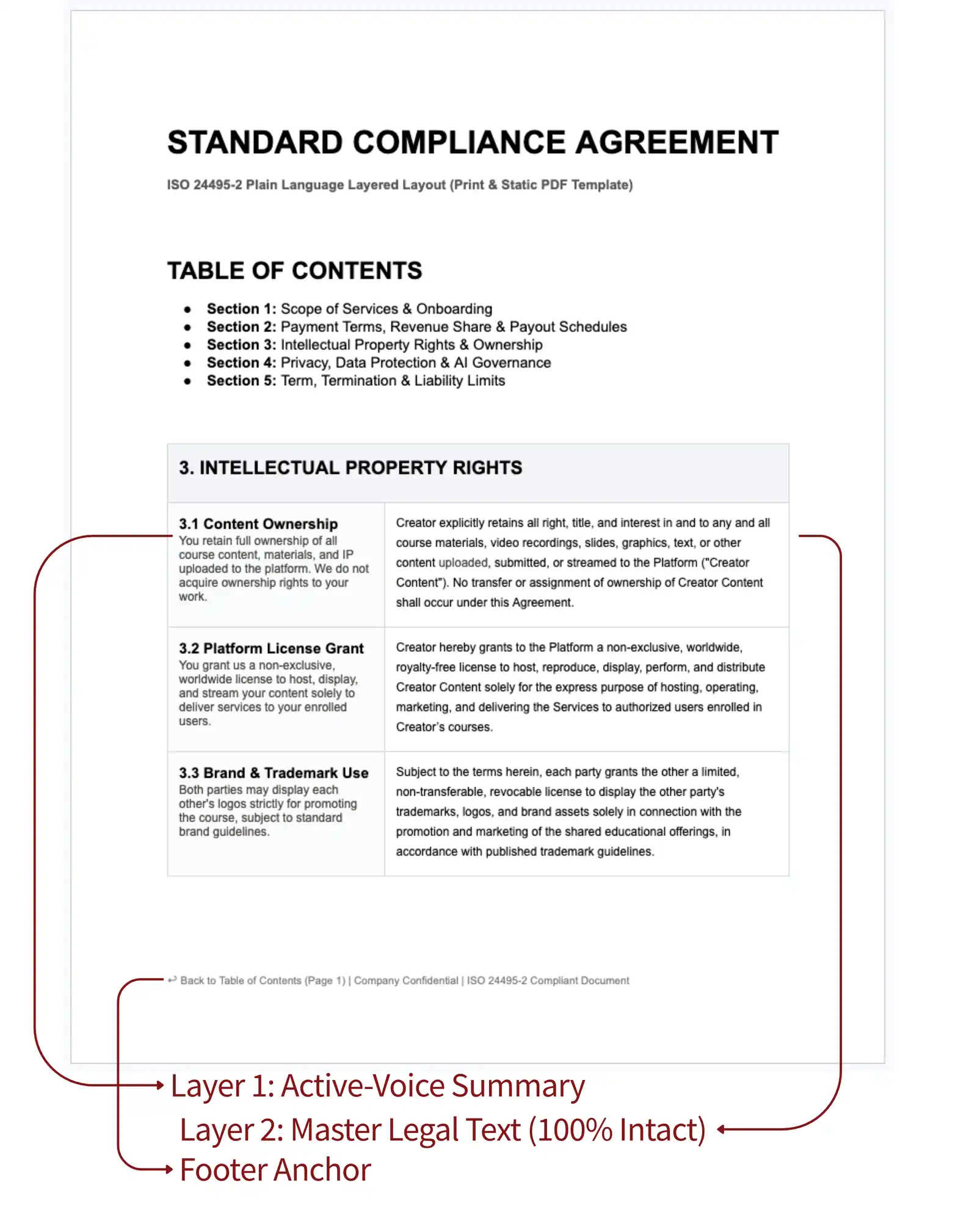
Static & Print Layering (For Illustration Purposes): This mock-up demonstrates how the asset-free ISO 24495-2 Information Architecture translates seamlessly to static A4/Letter portrait documents (such as Microsoft Word templates, printed paper, or downloadable PDFs) while maintaining full legal text integrity. In a full-length commercial contract, the front-page Table of Contents would typically occupy the entire first page to serve as a comprehensive visual navigation directory. In this representative excerpt, Section 3 (Intellectual Property Rights) is displayed in a side-by-side grid to illustrate how active-voice “In Brief” summaries remain paired with 100% intact, court-tested legal clauses across static page breaks without altering original contract wording.
Comparative Analysis: The Evolution of Professional Acceptability (2024 vs. 2026)
Evaluating the 2026 framework against our 2024 Phase B baseline demonstrates a massive leap in professional and institutional acceptability.
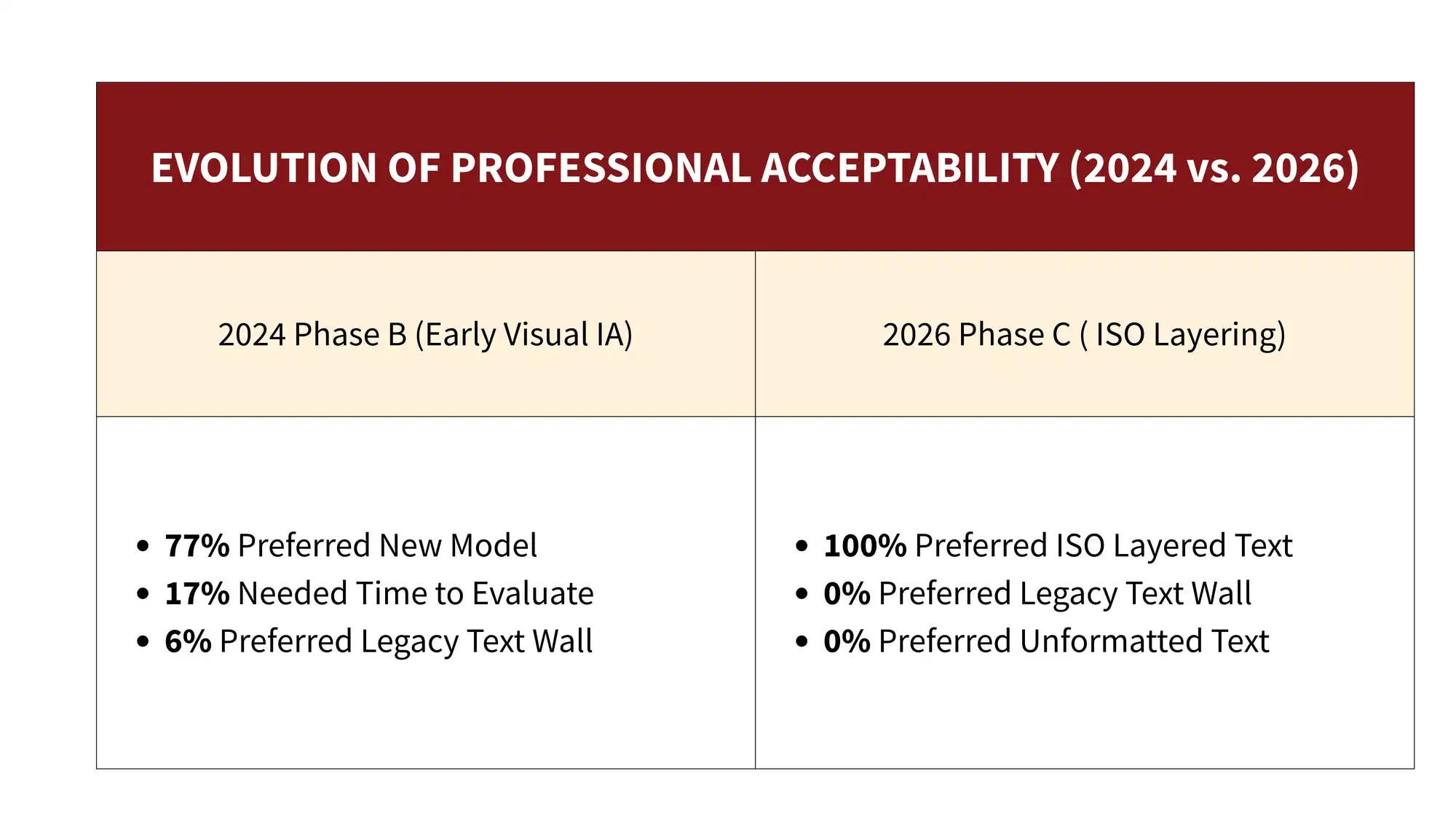
The primary catalyst for this shift was a deliberate strategic choice: reducing decorative visual elements in favor of pure, text-driven Information Architecture. In our 2024 Phase B testing (Contract Nerds), while 77% felt the redesigned terms improved trust, 6% of participants still expressed a preference for a “good old wall of text in Word,” citing caution around visual formatting.
By 2026, leaning entirely into clear typographic grids, structural side-by-side layering, and clean navigation completely neutralized legal resistance:
- 100% User Preference: In our 2026 survey, 100% of respondents explicitly preferred the ISO-layered text document over the traditional text wall (0% preferred legacy text, and 0% were neutral).
- Professional Trust & Compliance: 53% of respondents stated that the interface “absolutely enhances brand trust and comprehension while fully maintaining compliance integrity,” while the remaining 47% confirmed it “meets professional standards and is a major upgrade over a traditional text wall.” Crucially, 0% felt that a classic text-heavy layout was more authoritative or secure.
- Primary Business Benefits: When asked to isolate the single greatest benefit of ISO layering:
- 50% — Elevated Brand Trust: Signals modern corporate maturity and genuine transparency.
- 31% — Faster Onboarding Velocity: Removes friction and user hesitation during critical signup or deal-signing phases.
- 13% — Support Ticket Deflection: Empowers users to self-serve routine questions rather than contacting support.
These results confirm that for legal professionals and commercial counterparties, text-driven layering creates higher institutional confidence than graphic-heavy visuals. By keeping the underlying master text 100% intact and relying strictly on layout structure, this framework achieves maximum comprehension while satisfying the most conservative corporate standards.
To evaluate the core research question posed at the outset of this study: Can a standardized, asset-free, textdriven layout framework enable organizations to adopt legal design and meet ISO plain language criteria, even when changing the underlying legal text is not an option? The empirical testing and multi-typology implementations yield a decisive answer: Yes.
For decades, enterprise legal departments have resisted user-centered design under the false impression that legal design requires transforming rigorous boilerplate text into colorful illustrations or executing complete linguistic rewrites that introduce unacceptable liability risks. By isolating the presentation layer and deploying structured, text-driven Information Architecture (IA), this framework demonstrates that visual readability and ISO 24495 compliance are structural properties of document geometry, not graphic asset dependencies.
The Five Core Performance Vectors
The operational superiority and empirical success of this architecture-first framework over traditional plain language rewrites and visual overhauls can be synthesized across five core performance vectors:
1. Global Navigation Architecture (ISO Principle 1 – Findability):
Traditional compliance agreements lock information within a continuous, vertical scroll, forcing readers to search chronologically through pages of dense text. The framework replaces this unnavigable vertical stream with a persistent interactive sidebar menu in digital environments, or a front-page Table of Contents with margin header/footer return anchors in static print/PDF formats. Mapping out the entire taxonomy enables non-linear scanning, directly satisfying ISO findability criteria.
2. Layered Progressive Disclosure (ISO Principle 2 – Understandability):
Rather than presenting monolithic blocks of legacy text, clauses are housed inside responsive, dual-column containers. The top or left layer features a styled “In Brief” summary card in active voice, acting as an immediate cognitive guide, while the master legal text sits directly alongside, retaining 100% intact contractual wording.
3. Explicit Typographic Hierarchy & Visual Grid (ISO Principle 3 – Relevance):
The layout relies entirely on strict typographic rules—1.5 line heights, generous letter tracking, distinct header weight variations, and intentional negative space—to direct visual attention naturally without requiring graphic icons or visual asset maintenance.
4. Zero-Asset Technical Feasibility & Low Implementation Friction:
Executed via pure browser-native semantic HTML for web, and standard two-column table grids for Microsoft Word and PDF outputs, the framework avoids heavy JavaScript libraries or bespoke CMS integrations. Legal operations teams can copy, paste, and deploy compliant documents instantly.
5. Cross-Brand, Cross-Typology, and Cross-Medium Universality:
Altering only surface-level CSS tokens (colors and fonts) allows the architecture to adopt any corporate brand identity seamlessly. Furthermore, testing proved the framework scales effortlessly across fundamentally distinct legal typologies—high-volume B2C Terms (Calm prototype), B2B Creator Agreements (Maven prototype), and dense Regulatory AI Privacy Policies (AI Governance prototype), as well as across digital and physical A4/Letter print mediums.
The empirical validation underscores a rapid shift in professional and user acceptability. As detailed in the community survey tracking, preference for the ISO-layered text model evolved from an initial 77% acceptance rate in Phase B (2024) to a unanimous 100% preference in Phase C (2026), with 0% of respondents preferring the legacy text wall.
Beyond the Signature: Eliminating Post-Execution Operational Friction
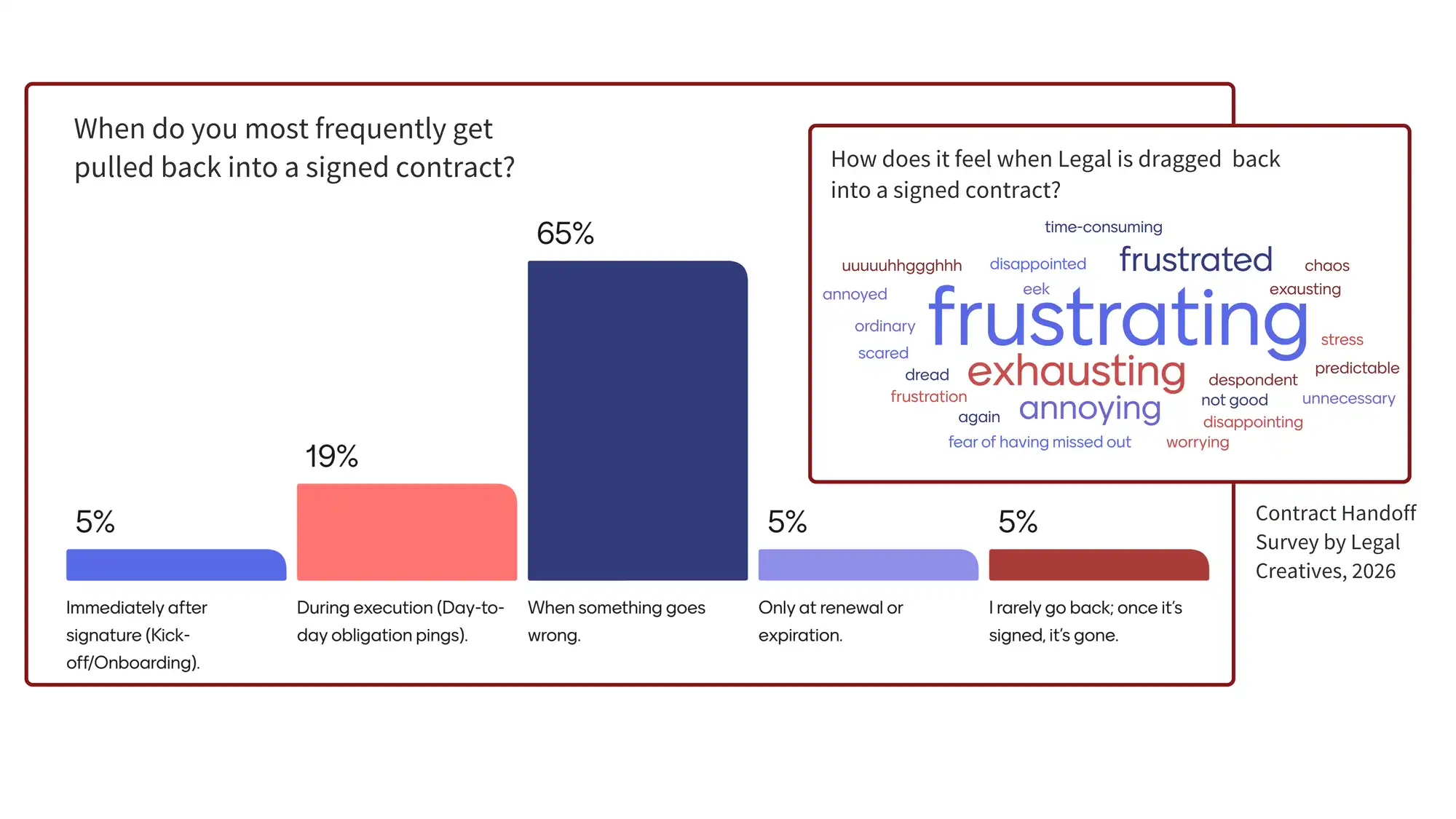
Contract signing represents only one phase of the agreement lifecycle; the second (and often most resourceintensive) phase is post-signature execution. While standard compliance frameworks focus almost exclusively on securing user consent at the point of signature, unstructured legal text creates a severe operational bottleneck immediately after execution. Our empirical research on post-signature contract handoffs reveals a systemic operational failure: 94% of legal professionals report being dragged back into signed contracts post-execution, with 65% pulled back when something goes wrong or a dispute occurs, 19% managing day-to-day obligation pings, 5% handling immediate onboarding confusion, and 5% dealing with renewal friction. Only 5% report clean handoffs where they rarely need to intervene.
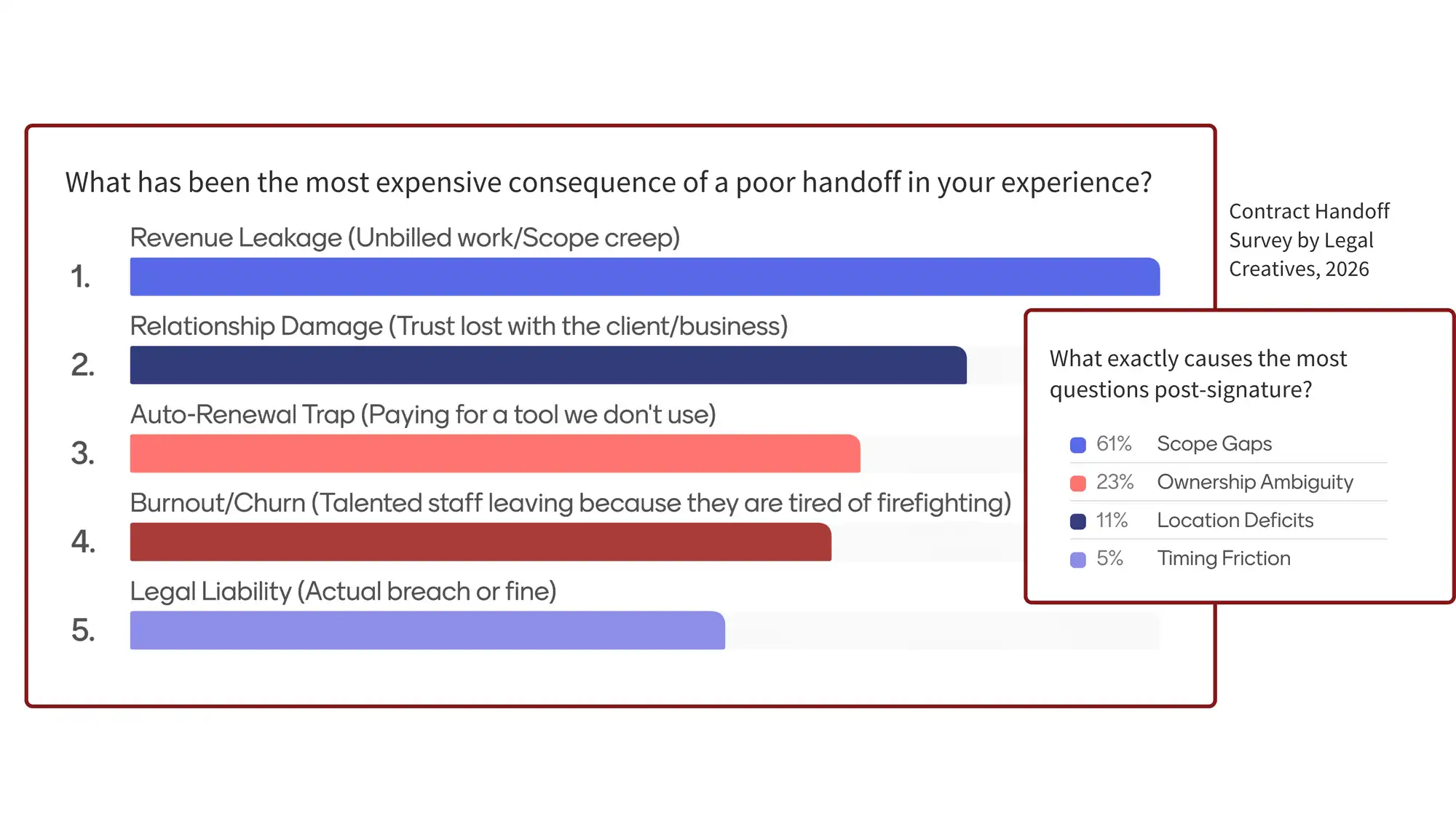
Furthermore, 84% spend between 1 and 6+ hours weekly, with over 34% losing nearly a full working day or more to post-signature clarifications. When asked what triggers post-signature queries, respondents identified Scope Gaps (61%) and Ownership Ambiguity (23%) as the primary culprits, issues directly caused by burying deliverables and operational responsibilities inside dense, linear boilerplate paragraphs.
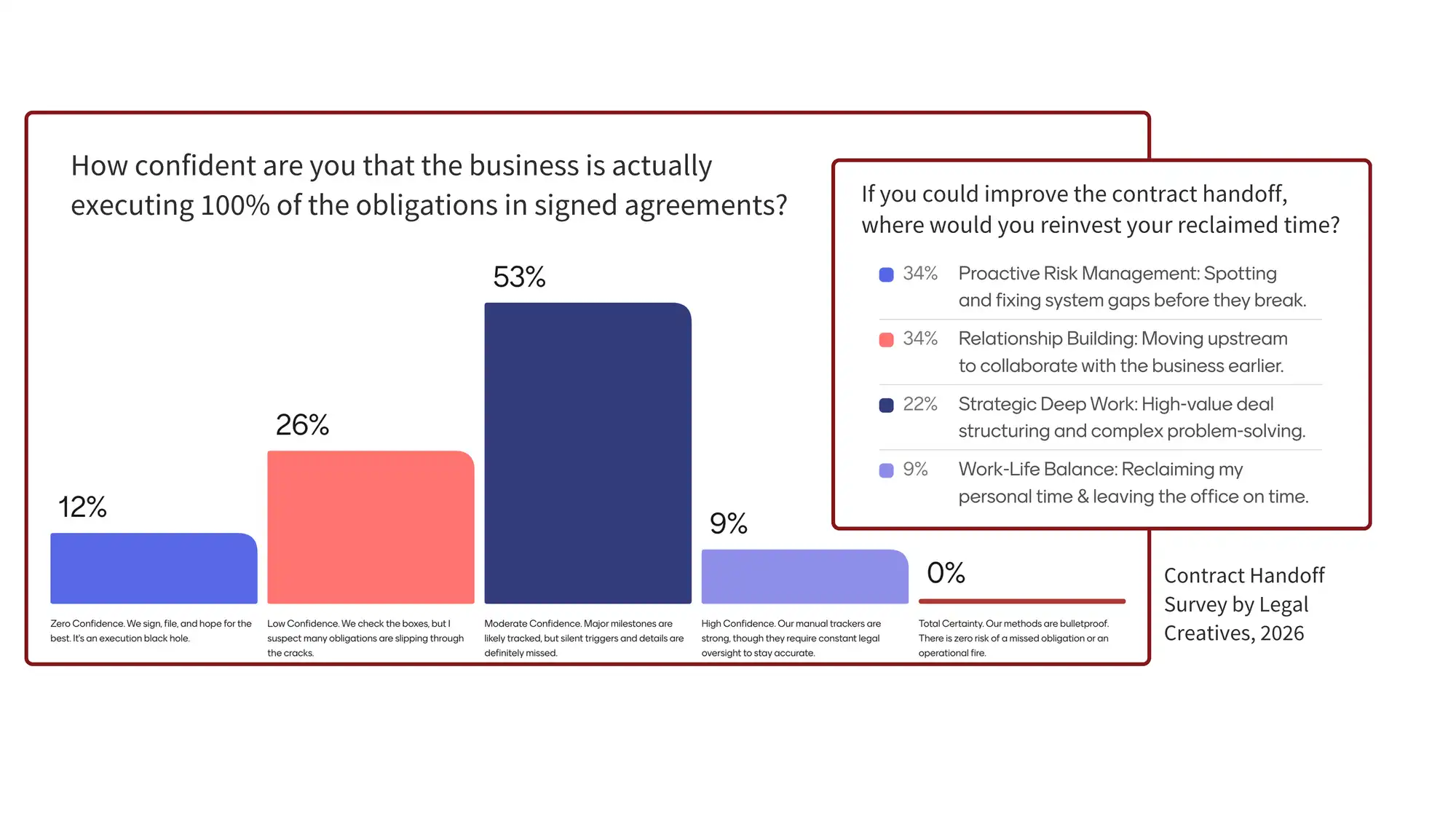
Crucially, 0% of surveyed legal professionals reported total certainty that business teams are executing 100% of their contractual obligations. The consequences of this poor handoff are financially and operationally severe: respondents ranked Revenue Leakage and Relationship Damage as the most costly outcomes, followed by Auto-Renewal Traps and Staff Burnout. When asked how legal teams feel when pulled back into signed contracts to manage operational friction, dominant responses centered on “Frustrating” and “Exhausting”.
By applying ISO 24495-2 Information Architecture—specifically structured summaries, clear tabular ownership grids, and modular section chunking—contracts and other legal documents can transform from a static PDF “execution black hole” into an operational playbook. Standardizing the layout at the delivery layer can help eliminate post-signature ambiguity, reclaiming precious time for legal teams to reinvest in Proactive Risk Management (34%), Upstream Relationship Building (34%), and Strategic Deep Work (22%).
Designated as a foundational research project, we aimed to explore the use of interactive design in the context of “legal” – how does a system have to be designed to provide a broader audience with access to law? Eight preliminary design principles emerged from our work:
This study set out to resolve a fundamental dilemma in modern legal operations: How can organizations break the fine print monopoly and meet international plain language standards when altering vetted legal wording is operationally unfeasible?
Our findings demonstrate that the structural failure of modern digital and print compliance disclosures is rarely the underlying legal language itself, but rather the flat, unnavigable linear container in which it is housed. True contract usability does not require graphic cartoons or cosmetic visual masks that throw color and icons at a broken document without mending its underlying data architecture.
By establishing a standardized, text-driven Information Architecture powered by ISO 24495-2 layering principles, this research delivers a repeatable, white-label blueprint. Whether deployed across digital platforms or formatted natively for static print and PDF outputs, this framework proves that legal operations can transform mandatory fine print from an unreadable administrative barrier into a transparent, compliant, and deeply trusted organizational asset—all while keeping 100% of the underlying legal text fully intact.
Furthermore, our preliminary inquiry into the post-signature lifecycle reveals that the benefits of text-driven Information Architecture extend far beyond the moment of signing. Unstructured legal text creates severe post-execution friction, leading to scope gaps, ownership ambiguity, revenue leakage, and thousands of hours lost to operational firefighting.
Future Research Directions
While this paper empirically validates the pre-signature readability, ISO compliance, and user preference of text-driven layering (achieving 100% acceptance), it opens vital avenues for future empirical study. Subsequent research should evaluate the quantitative impact of ISO-layered architecture across postsignature execution, specifically measuring whether standardized document geometry directly reduces:
1.Revenue Leakage & Scope Creep: Quantitative tracking of unbilled work and post-signature scope disputes in B2B service agreements.
2.Legal Help-Desk Volume: Measuring reductions in weekly pings and internal briefing overhead incurred by legal ops teams.
3.Execution Compliance Rates: Testing whether tabular ownership grids and modular progressive disclosure increase overall obligation tracking from current uncertainty levels toward total certainty.
By connecting pre-signature clarity with post-signature execution, legal design transitions from a front-end cosmetic intervention into a core engine for enterprise operational efficiency.
References
Allbon, E. (2024). Legal Design: New Opportunities for the Legal Information Sector. Cambridge University Press & Assessment.
Blanchard, S. J., & Milsark, E. (2025). Research Designs for Evaluating the Effects of Terms of Service and Privacy Policies on Consumer Understanding and Behavior. Georgetown McDonough School of Business Research Paper No. 5205323.
Bloomberg Law. (2024). Consumer Data Privacy Laws.Bloomberg Law Insights.
Burton, S. (2018). The Case for Plain-Language Contracts. Harvard Business Review, January-February Issue.
Deloitte (2017), “2017 Global Mobile Consumer Survey: US Edition,” online, https://www2.deloitte.com/content/dam/Deloitte/us/Documents/technology-mediatelecommunications/ us-tmt-2017-global-mobile-consumer-survey-executive-summary.pdf. Elshout, M., Elsen, M., Leenheer, J., Loos, M., &
Luzak, J. (2016). Study on Consumers’ Attitudes towards Terms and Conditions (T&Cs). European Commission Research Report.
Haapio, H., Hagan, M., Palmirani, M., & Rossi, A. (2018). Legal Design Patterns for Privacy. Proceedings of the 21st International Legal Informatics Symposium IRIS.
Hagan, M. (2016). Law by Design. Stanford Legal Design Lab, Online: https://lawbydesign.co
International Organization for Standardization. (2023). Plain language — Part 1: Governing principles and guidelines (ISO Standard No. 24495-1:2023).
International Organization for Standardization. (2025). Plain language — Part 2: Legal communication (ISO Standard No. 24495-2).
Legal Creatives. (2024). Contracts Are Failing Their Users: What Legal Professionals Are Seeing on the Ground. Global Industry Survey Report, online: https://www.legalcreatives.com/blog/contracts-arefailingtheir-users-survey
Mack, O., Krolik L., & Manuello, T. (2026) Visual Literacy for Lawyers. American Bar Association.
Nousiainen, Katri (2021). General Theory of Legal Design in Law and Economics Framework of Commercial Contracting, 5 J. Strategic Contracting & Negotiation 247 (2022) (original work published 2021), https://doi.org/10.1177/20555636211061611.
Martínez, A., et al. (2022). Empirical Testing on Consumer Preferences and Document Layout Navigation. Journal of Legal Communication & Design.
McDonald, A. M., & Cranor, L. F. (2008). The Cost of Reading Privacy Policies. I/S: A Journal of Law and Policy for the Information Society, 4(3), 543-568.
Visual Capitalist. (2020). Visualizing the Length of Internet Agreements. Visual Capitalist Publishing, online: https://www.visualcapitalist.com/terms-of-service-visualizing-the-length-of-internetagreements.
World Commerce & Contracting. (2019). Contract Design Pattern Library, online: https://contractdesign. worldcc.foundation
Download this use case now.
Call for Submissions!
Submit your Legal Design story until June 30, 2026.
Next Issue of the LDJ
We are receiving submissions for Vol. 3 of the Journal!

Do you want to share your Legal Design Story with the world?
Everyone can submit a use case for review by our expert team.
Here’s how.
How does it work?
We are looking for different kinds of use cases out of different phases of a legal design process.
This part of the Journal will showcase the best work and developments in legal design. This can be in the form of text, digital artifacts, reports, visualisations or any other media that we can distribute in a digital journal format. Text submissions can be between 1,000 and 5,000 words and are reviewed by our Studio editorial team.
What kind of practical use cases can I submit?
We are looking for Prototypes or implemented solutions of legal design use cases.
Your submission should consist the following:
Your submission should consist the following:
- Challenge: Describe the problem you had to solve
- Approach: Describe the selected design process and phases you went through in order to solve the challenge. Please insert also a section of the impact that your concept will bring or brought.
- Solution: Show us the solution you developed. Not only with words but with images.
Make sure you do have permission and the rights to share your project an materials (such as images and use case stories etc.)
Why is there a review process?
Our goal is to show high quality legal design cases for others to learn from.
How does the review process look like and how do we select use cases for publication ?
We are looking for Prototypes or implemented solutions that will be reviewed by the following criteria:
- Aesthetics
- Depth of concept (Why, What, How)
- Process steps you selected
- Impact
Do you want to share your Legal Design Story with the world?
What are the requirements for submission?
Please find a list of requirements and tips here.
Why publish with us?
Reputation
The editorial teams are comprised of many of the leading legal design academics and practitioners from around the world.
Diamond open access
We are a diamond open-access journal, digital and completely free to readers, authors and their institutions. We charge no processing fees for authors or institutions. The journal uses a Creative Commons BY 4.0 licence.
Rigour and quality
We are using double blind peer review for Articles and editorial review for the Studio. Articles are hosted on Scholastica which is optimised for search and integration with academic indices, Google Scholar etc.
Your Studio Editorial Collective
Do you want to see more use cases ? Take a look at the websites of some of our Studio editorial team.


AI Usage & Disclosure Policy
Please take note of our AI Usage & Disclosure Policy***